

Quick answer
Keep two full days for Thimphu. Day one is the city, Buddha Dordenma, Memorial Chorten, Tashichho Dzong in the evening and the weekend market if your dates match. Day two is Dochula Pass, and Punakha Dzong if you have the extra permit. Indians pay a Sustainable Development Fee of ₹1,200 per person per night, and rupees are accepted almost everywhere in town.
Below is the same information we go through with clients before they book: drive times, fees, which places are shut on which days, and the timing mistakes people make most often.
Money first, because everyone asks. The ngultrum (Nu) is pegged to the rupee, one to one, so Nu 500 is ₹500. Hotels, shops and taxi drivers in Thimphu take INR notes. Carry smaller notes, ₹100 and ₹200, because small shops often don't have change for ₹500. ATMs that accept Indian cards are rare, so carry enough cash for the full trip and keep some extra for fee changes at counters.
Places to visit inside Thimphu city
1. Buddha Dordenma
This is the big gold Buddha on Kuensel Phodrang hill at the southern end of the valley. You can see it from the road before you reach. From the town centre it's a 15 to 20 minute drive. The statue is a little over 50 metres tall, gilded bronze, and one of the biggest seated Buddhas in the world.
Go in the late afternoon, around 4 pm, when the light is on the statue and you can see the valley below. Inside the base there is a hall with thousands of small Buddha figures. Photos are not allowed inside, the caretaker will tell you, so keep the phone in your pocket.
Budget 45 minutes to an hour. The fee is not clear. Older circulars said free, newer tour operator lists say Nu 300, and your driver will know what the counter is charging this season. The plaza is windy even in May, so take a light jacket. There is parking at the top and the walk from the car to the statue is short and flat, fine for older parents.
2. National Memorial Chorten
This is a white chorten in town near the main roundabout, five minutes by car from most hotels. From early morning, older residents walk around it clockwise, spinning prayer wheels and counting beads. Many of them come every day.
Go at about 7 am, that is when most people are there. You can join the walk, nobody minds a visitor going around with them, just keep going clockwise like everyone else. Don't stand at the edge filming people's faces.
Thirty to 45 minutes is enough. The fee is Nu 500 on the current Department of Tourism list. The inner shrine has steep, narrow stairs, so if anyone in your group has knee problems, skip the inside and do only the outside circuit. Most of what people come to see is outside anyway.
3. Tashichho Dzong
Tashichho Dzong has the government offices and is also the summer home of the central monk body. Because of that, on working days tourists can go in only after the offices close, roughly 5 pm onwards. On weekends and government holidays it's open through the day.
Plan it as the last stop of day one, after the Buddha and the market. If you reach around 5 pm you will see the flag being lowered, and there are fewer people than at midday.
The dress rule here is stricter than anywhere else in Thimphu. Full sleeves, collared shirt for men, long trousers or a long skirt. No shorts, no caps, nothing sleeveless. Some guides carry a scarf to lend, but don't depend on that, pack your own.
Budget about an hour. It's 2 to 3 km north of the centre, ten minutes by car. The fee is Nu 500 on the newer list, but some counters have quoted Nu 1,000 since a revision in 2022, so carry extra cash.
4. Centenary Farmers' Market
Open Friday to Sunday only. This is the point most people miss when they fix dates.
It's a covered market next to the Wang Chhu river where Thimphu residents do their weekly shopping. You will find red chillies, dried yak cheese on strings (chhurpi, it's very hard, chew slowly), fern tops, red rice and betel nut. Cross the small cantilever footbridge and you reach the handicraft side, with prayer flags, masks and wooden bowls.
It's fullest in autumn. Bargain a little at the handicraft stalls if you want. Don't bargain at the vegetable stalls, the prices are already low.
Budget 45 minutes to an hour. Entry is free. If you want to buy souvenirs, this is a good place to compare prices before you buy in the shops on Norzin Lam.
5. Folk Heritage Museum and the National Textile Museum
These two are close to each other, so do them back to back. They are a good option for a rainy afternoon.
The Folk Heritage Museum is an old three-storey farmhouse, restored to show how a rural Bhutanese family lived. Kitchen at the bottom, grain store, altar room at the top. To go between floors you climb a notched log, a tree trunk with steps cut into it, so wear shoes and not slippers. The fee depends on which list you check, anywhere from Nu 150 to Nu 300. It's closed on Bhutanese public holidays. Budget about an hour.
The Textile Museum is run with the Royal Textile Academy. It's smaller and fully indoors. Two floors of kiras, ghos and royal clothing, and sometimes weavers working at looms. Budget around 45 minutes. The 2026 operator list puts the fee at Nu 500.
If you have time for only one, do the farmhouse. Children usually prefer it because of the log ladder.
6. Motithang Takin Preserve
The takin is Bhutan's national animal, it looks like a mix of a goat and a cow. The preserve is in Motithang, about 15 minutes by car from town. It's a fenced area of forest with a gravel path along the outside.
Check the day before you go. Most sources say it's closed on Mondays and national holidays, otherwise open from about 9 am to 4 pm. The fee is small, around Nu 30 to 50.
Go in the morning, that is feeding time and the animals come close to the fence. Thirty minutes is enough.
7. Changangkha Lhakhang
An old temple on a ridge above town. Local families bring newborn babies here for the lamas to name and bless them. Climb the steps from the car park and you get a view over Thimphu town.
It's on the same road as the Takin Preserve, so do the two together. Budget 30 to 45 minutes. The fee is Nu 500 on the current list. It's quieter in the morning. The same dress rules as other temples apply, covered shoulders and knees.
8. Institute for Zorig Chusum
Zorig chusum means the thirteen traditional arts, thangka painting, wood carving, sculpture, embroidery and others. At this school in town you can walk through the workshops and watch students working on pieces that take months to finish.
It works only on weekdays during term. On weekends and in school holidays it's closed and there is nothing to see. When it's open, budget 45 minutes to an hour. Ask before you photograph a student.
9. Simtokha Dzong
If you come in from Phuentsholing or Paro, you pass Simtokha Dzong, about 5 km south of the centre. It's one of the oldest dzongs in Bhutan, built in the 1600s. It's smaller and quieter than Tashichho and now houses a Dzongkha language institute.
We usually stop here on arrival day, since it's on the road and people want a break after the long drive. Thirty to 40 minutes is enough. The 2026 operator list says Nu 500, older guides say free. Same dress rules as Tashichho, so if you are arriving in shorts after the drive, change before this stop or skip it.
Day trips from Thimphu
10. Dochula Pass
Dochula is at roughly 3,100 metres on the Thimphu to Punakha road, about 30 km out, 45 minutes to an hour from the city. At the top there are 108 small memorial chortens (the Druk Wangyal Chortens) on a mound, a temple, and on a clear day a row of snow peaks to the north.
The views depend on weather. Clouds usually come up by late morning and the peaks get covered. Leave Thimphu by 7, 7:30 at the latest. October to February gives the best chance of seeing the range. In the monsoon you will mostly see mist.
Thirty to 45 minutes at the pass is enough, more if you have tea at the cafe. There is usually no fee for the chortens. It's much colder than Thimphu, so carry a jacket even in summer. In winter there can be snow on the road and the pass sometimes closes for a few hours, your driver will check before leaving.
You can do Dochula as a half day and be back in Thimphu for lunch. If there is any chance you will go on to Punakha, get the route permit done the day before. Details are in the Punakha section below.
11. Tango and Cheri monasteries
This is for people who want a walk. Both monasteries are in the forested hills north of Thimphu, around 14 km from town. From either trailhead it's about an hour uphill on a rough path. Tango is a Buddhist university with many young monks. Cheri is older and has an old suspension footbridge at the start of the trail.
Do one, not both. Both in one day is possible, but at this altitude most people get very tired. Half a day covers one comfortably.
The good months are March to May and September to November. In July the path is slippery and there are leeches, so wear proper shoes and full-length trousers. Carry water and some snacks, there is nothing to buy at the top. Not suitable for people with knee or breathing problems.
12. Punakha Dzong
If you have one extra day, use it for Punakha. It's 72 to 74 km from Thimphu, two and a half to three hours each way including the Dochula stop. Punakha is lower and warmer, around 1,200 metres, so you go from pine forest down to rice fields in one morning. Carry layers, you will need a jacket at Dochula and a T-shirt in Punakha.
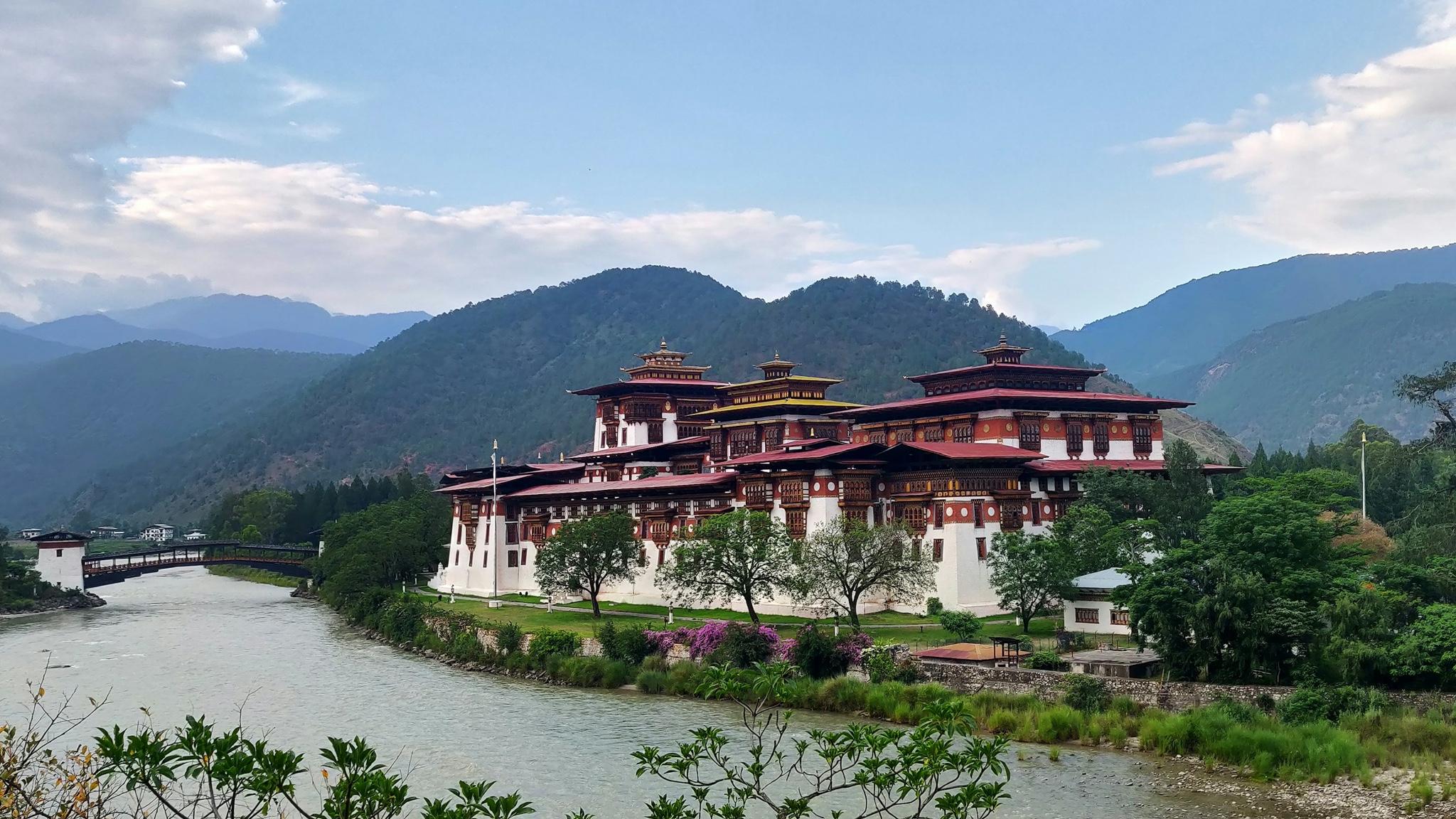
The dzong is at the meeting point of two rivers, the Pho Chhu and the Mo Chhu, and it's the one in most Bhutan photos. In spring the jacaranda trees in the courtyard flower purple. Budget at least an hour and a half inside, plus time to walk the long suspension bridge a few minutes upstream.
The fee is Nu 500 on the newer list, though some sources still say Nu 1,000.
Important: the permit. Your Phuentsholing or Paro entry permit covers only Thimphu and Paro. For Punakha you need a separate route permit from the Immigration office in Thimphu, and that office works Monday to Friday only. If you reach Thimphu on a weekend, you can't get it until Monday, so plan your days around that.
A same-day return is possible, but it's a long and tiring day. We suggest one night in Punakha and coming back over Dochula the next morning, when the chance of clear views is better.
13. Chimi Lhakhang
Near Punakha, a 20 to 30 minute walk across rice fields from the road at Sopsokha. It's the temple of Drukpa Kunley, the "Divine Madman", and couples come here to pray for a child. In the village on the way you will see phalluses painted on house walls. This is normal in the area and is believed to keep evil away. If you have children with you, be ready for questions.
The fee is Nu 500 on the 2026 list. Opening hours differ depending on the source, so go in the morning. The walk is flat and easy, fine for children and older parents.
How to get to Thimphu from India
Most Indians come by road through Phuentsholing, and our Bhutan Trails package uses the same route. Fly into Bagdogra, or take a train to Hasimara or New Alipurduar, and reach Jaigaon on the Indian side of the border. The entry permit is issued at the immigration office in Phuentsholing. It works on working days only, roughly 9 am to 5 pm with a lunch break, and Monday queues are long, so reach early. Phuentsholing to Thimphu is about 150 km, but on mountain roads that takes 5 to 6 hours, so most people stay a night in Phuentsholing first.
The other option is flying directly into Paro. Druk Air and Bhutan Airlines fly from Delhi, Kolkata and a few other cities. You get the permit on arrival at Paro airport. Thimphu is around 50 km away, a little over an hour by car.
Documents. Carry your original passport with at least six months validity, or your Voter ID card. Aadhaar and PAN are not accepted. If you have a passport, take it, the counter is quicker with it. The SDF, ₹1,200 per person per night, is paid when your permit is issued. Children from 6 to 12 pay half. Under 6 pay nothing.
Best time to visit Thimphu
March to May, and late September to November. These are the two windows we suggest to most people.
Spring has rhododendrons and mostly clear days. Autumn is cooler, has the best mountain views from Dochula, and has the Thimphu Tshechu festival, usually in September or October. Festival dates follow the lunar calendar, so check the dates for your year before booking. Hotels fill up during the festival, so book early if your dates overlap.
December to February is cold, often below zero at night, but skies are clear and hotels are less full. It's a good option if you pack proper winter clothes. June to August is monsoon. Expect landslide delays on the Phuentsholing road and cloud on Dochula, though the valleys are very green.
Thimphu is at about 2,300 metres. Most people are fine. Still, keep the first evening easy and don't plan a hike on arrival day.
A sample 2-day Thimphu plan
Day one works best on a Friday, Saturday or Sunday, because of the market. Start at 7 am at the Memorial Chorten. Around 9, after breakfast, go to Changangkha Lhakhang and then the Takin Preserve on the same road (not on a Monday). Folk Heritage Museum at about 11:30. Lunch in town around 1. Try ema datshi, but ask for less spicy unless you are used to very spicy food. At 2:30 go to the Centenary Farmers' Market and the handicraft stalls. By 4 pm reach Buddha Dordenma. Then Tashichho Dzong at about 5:15 when it opens to visitors (any time on a weekend). End with a walk on Norzin Lam, the main street.
Day two is Dochula, plus Punakha if your permit is done:
- 7:00 am, leave for Dochula with a packed breakfast
- 8:00 am, at the pass while the peaks are still visible
- Option A: back in Thimphu by 11, then Zorig Chusum (if it's a weekday) or the Tango hike in the afternoon
- Option B: continue to Punakha. Lunch there, Punakha Dzong and the suspension bridge in the afternoon, Chimi Lhakhang if there is time, and stay the night in Punakha
If your city day falls on a weekday, replace the market with the Textile Museum and the Zorig Chusum school, since the market will be closed.
Planning the trip? See our Bhutan Trails 5N/6D from ₹42,999 by road via Phuentsholing, or Bhutan Highlights 5N/6D from ₹41,999 with a night in Punakha.
Plan it with us
Trips we run in Bhutan
Hotels, transfers, permits and a local guide, priced in rupees.

Frequently asked questions
How much is the SDF for Indians visiting Thimphu in 2026?
₹1,200 (Nu 1,200) per person per night. Children aged 6 to 12 pay half, under 6 pay nothing. It's paid when your entry permit is issued, at Phuentsholing or at Paro.
Do Indians need a visa for Bhutan?
No visa. You need an entry permit, which you get at the Phuentsholing immigration office or on arrival at Paro airport. Carry your original passport or Voter ID.
Do I need a separate permit for Punakha?
Yes. The normal entry permit covers only Thimphu and Paro. For Punakha you apply for a route permit at the Immigration office in Thimphu, on a working day. If you travel with us, our team handles this while you are sightseeing.
Can I use Indian rupees in Thimphu?
Yes. The ngultrum is pegged to the rupee, and hotels, shops, restaurants and taxis take INR. Carry smaller notes. Don't depend on Indian debit cards at ATMs, they often don't work.
What is Tashichho Dzong's timing for tourists?
On working days, from roughly 5 pm, after the government offices close. On weekends and government holidays it's open through the day. Dress formally, full sleeves and long trousers.
Is Thimphu to Punakha doable as a day trip?
Yes, but it's tiring. It's two and a half to three hours each way. We suggest one night in Punakha and doing Dochula in the morning on the way back.
How many days do I need in Thimphu?
Two days covers the city and Dochula. Add a third day for Punakha, or for a monastery hike to Tango or Cheri.
When is the weekend market open?
Friday to Sunday. It's closed the rest of the week. If the market is important to you, make sure your Thimphu nights include a weekend.
Want this trip planned for you?
Tell us your dates and who's travelling. A MyTripLama planner sends a day-by-day plan and a price, usually the same day.
Sources we checked
- Windhorse Tours: monument entrance fees
- Embassy of India, Thimphu
- Little Bhutan: Thimphu attractions
- TravelTriangle: Tashichho Dzong
Timings, fees and permits change. Confirm the latest with the venue or your MyTripLama planner before you travel.